
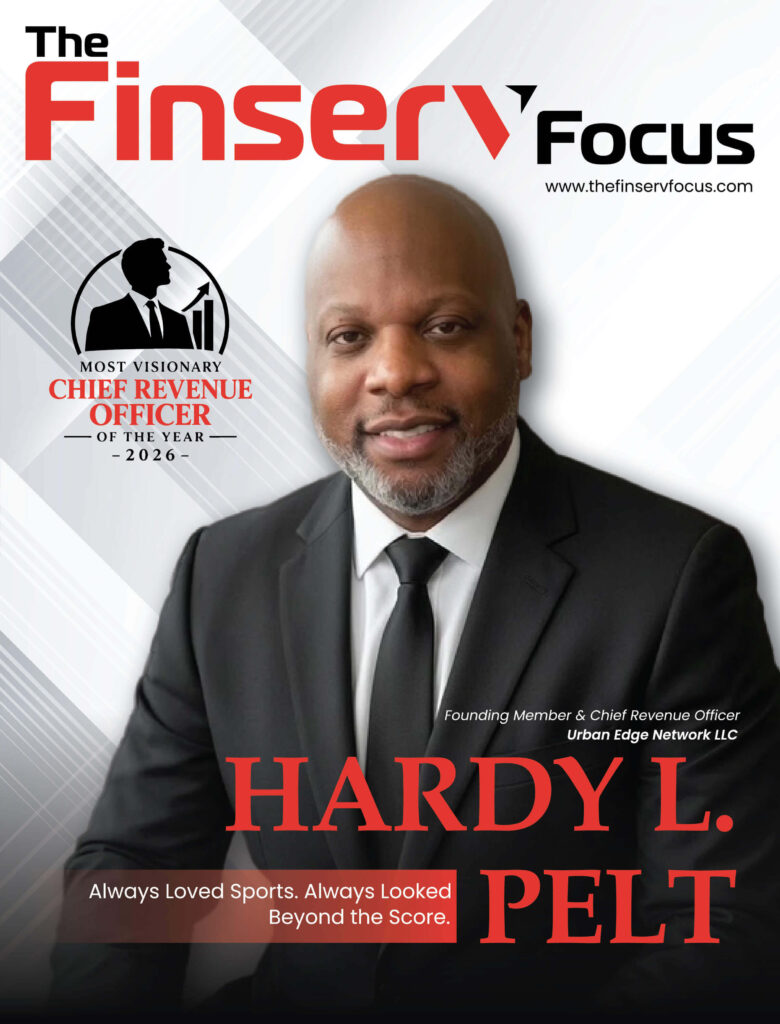
Every Great Story Begins Somewhere. The best stories are rarely about where you start. They are about what you build from that beginning. For Hardy L. Pelt, Founding Member & Chief Revenue Officer at Urban Edge Network LLC, that beginning was a belief that sports could be much more than a game on a screen.
It could be a connection.
A connection between fans and athletes. Between schools and communities. Between conferences and brands. Between live moments and lasting engagement. At Urban Edge Network LLC, Hardy and his team envisioned building not simply a channel, but an infrastructure that allows schools, conferences, athletes and communities to participate in the value created by their content. His curiosity extends beyond the traditional boundaries of sports and media, listening to young fans, athletes, engineers, marketers, school administrators and entrepreneurs to understand how different perspectives can shape what comes next.
In a world where sports continues to create real-time attention, conversation and community, Hardy sees an opportunity to use AI, real-time data and intelligent systems to transform that attention into meaningful, measurable engagement without losing the authenticity that made people care in the first place.
From metadata and first-party relationships to personalized content, sponsor-ready programming and smarter measurement, the future belongs to those who can turn live moments into lasting value. Because the biggest opportunities aren’t always where everyone is looking. Sometimes, they are waiting at the beginning of something new. And perhaps that is what makes beginnings so powerful— They don’t tell us how the story will end. They simply give us the opportunity to begin.
From Live Attention to Lasting Engagement and Economic Value

Sports is one of the few forms of media that consistently creates appointment viewing, real-time conversation, and a sense of community at the same moment. For Hardy, this makes sports much more than entertainment; it represents a powerful economic engine connecting media, technology, advertising, commerce, and culture.
He believes live sports brings together audiences that are increasingly fragmented across other forms of media. That concentration of attention creates value that extends far beyond the final score, creating opportunities for brands, publishers, schools, athletes, and communities.
According to Hardy, the next evolution of sports will see every game becoming a dynamic data and content ecosystem. A single live event can generate premium broadcasts, personalized highlights, social media content, commerce opportunities, sponsor integrations, athlete storytelling, and new advertising inventory in real time.
At Urban Edge Network LLC, Hardy sees sports rights not simply as programming rights, but as the foundation for year-round relationships among fans, schools, conferences, athletes, and brands. He believes the companies that succeed will be those that can transform live attention into measurable engagement while preserving the authenticity that made audiences connect with the sport in the first place.
Hardy also highlights the unique power of sports to create genuine emotional connections between brands and audiences. Fans do not simply consume the teams, schools, and athletes they care about; they identify with them. They celebrate together, debate together, travel together, and build traditions around them. When brands enter these environments thoughtfully and respectfully, they have the opportunity to become part of the experience rather than an interruption to it.

This opportunity is particularly significant in the communities served by UEN. HBCUs, NAIA institutions, and emerging sports properties often have deep local, alumni, and cultural connections that may not be fully captured by traditional audience-size metrics.
Hardy believes that a smaller but highly engaged audience can sometimes create greater brand impact than a larger passive audience. The opportunity, therefore, is to help advertisers understand the value of these communities and provide modern ways to activate around them through custom content, interactive advertising formats, QR-enabled commerce, contextual sponsorships, branded highlights, and measurable outcomes.
For Hardy, the future of sports advertising is not simply about purchasing impressions around a game. It is about earning relevance within the fan relationship. As sports, technology, and data continue to converge, he sees an opportunity to build a more connected ecosystem – one where live moments create meaningful engagement, communities participate in the value they generate, and brands become part of the stories that fans genuinely care about.
Building a Media Ecosystem Where Underserved Does Not Mean Under-Valued
For Hardy, the idea behind UEN began with a simple observation: there was an enormous amount of high-quality sports, culture, and community storytelling attracting passionate audiences, yet many of these stories did not have equitable access to national distribution, sophisticated monetization, or modern technology.
Too often, traditional media determined which institutions and communities were “large enough” to matter. Hardy believed technology had evolved enough to challenge that model and that the economics of media no longer had to work that way.
Urban Edge Network LLC (UEN) was built around the belief that being underserved does not mean being under-valued. As a 100% Black-owned independent media company, UEN is demonstrating that sophisticated sports-media infrastructure and commercial innovation do not have to be limited to the industry’s largest legacy platforms. By bringing together streaming technology, programmatic advertising, direct brand relationships, strong rights partnerships, and intelligent distribution, UEN is building a scalable media business around audiences that legacy media historically overlooked.
For Hardy, the vision extended beyond creating another media channel. It was about building the infrastructure that would allow schools, conferences, athletes, and communities to participate in the value created by their content. That vision remains central to UEN’s opportunity: democratizing premium sports media while bringing the same level of innovation, measurement, and commercial sophistication that advertisers expect from the world’s largest platforms.
Hardy’s philosophy is straightforward: own the relationship, respect the audience, and make technology work harder so the audience does not have to. In his view, distribution alone is no longer enough. A modern media company must help audiences discover content, make it accessible across the screens they choose, understand what they value, and create advertising experiences that feel relevant rather than disruptive.
From a commercial perspective, Hardy believes in building from the audience backward rather than from the ad unit forward. That means first understanding what the fan is doing, why the content matters, what data and context can responsibly be used, and what outcome a brand is trying to achieve. From there, opportunities can emerge across video, branded content, sponsorships, programmatic demand, interactive formats, and commerce creating a more connected ecosystem around the audience.
Equally important to Hardy is the principle that growth should be shared with the rights holders and communities that make the content possible. Long-term value is created when the network, institution, advertiser, and fan can all benefit from the same ecosystem.
For Hardy, the opportunity is ultimately bigger than media distribution. It is about creating a more equitable sports and entertainment ecosystem, one where overlooked stories can reach wider audiences, communities can participate in the value they create, and technology becomes an enabler of connection rather than a barrier to it.
From Challenge to Opportunity: Building the Future of Sports Media
For Hardy, one of the most significant challenges has been building at the intersection of multiple industries that are evolving simultaneously: sports rights, streaming technology, advertising technology, measurement, consumer behavior, and institutional partnerships.
Scaling any one of these areas is complex. Scaling all of them together requires constant adaptation, innovation, and reinvention. Another challenge has been reshaping how the marketplace evaluates emerging and culturally significant sports audiences. Historically, audience value has often been measured primarily through scale, while factors such as loyalty, cultural relevance, time spent, and purchasing influence received less attention.
Hardy believes that premium does not have to mean traditional. A highly engaged and culturally connected audience can deliver meaningful value even when it does not fit conventional audience-size metrics. Helping brands and partners understand and activate around that value has become an important part of UEN’s journey.
Operationally, achieving scale has required a strong focus on standardization and technology. UEN delivered more than 11,000 live games last season across HBCUs, NAIA institutions, and other emerging sports properties. At that scale, production, metadata, scheduling, advertising, rights management, distribution, and reporting must work together as one integrated system. Supported across web and mobile, with expanding FAST distribution and modern programmatic monetization infrastructure, that challenge has become an advantage for UEN, pushing the organization to build for the future rather than simply replicate the systems of the past.
Looking ahead, Hardy envisions Urban Edge Network evolving from a sports streaming network into an intelligent sports-media and commerce platform. The live game will remain at the center, but the experience surrounding it will become increasingly personalized, automated, and interactive. Fans could increasingly receive individualized highlight feeds, team and athlete alerts, AI-generated recaps, multilingual content, and recommendations based on what they genuinely care about – not simply what a traditional programming schedule tells them to watch.
On the business side, Hardy sees significant opportunities in agentic advertising, contextual intelligence, direct brand marketplaces, shoppable video, and outcome-based measurement. He envisions a future where a brand can communicate the audience it wants to reach and the business outcome it hopes to achieve, while intelligent systems identify the most relevant games, moments, creative formats, and price points. At the same time, transparency, responsible data practices, and human oversight will remain essential to the process.
UEN is also expected to expand its distribution across web, mobile, FAST platforms, and strategic syndication while continuing to develop premium direct-to-consumer experiences.
For Hardy, however, the goal is not simply to make sports content available everywhere. The goal is to make thousands of live events discoverable, monetizable, measurable, and personally relevant wherever and whenever fans choose to experience them. That vision represents the next chapter of UEN: where technology does more than distribute content – it understands the audience, strengthens the connection, and creates new value around every live moment.
The CRO as an Architect of Value
For Hardy, the modern Chief Revenue Officer cannot simply be the head of sales. The role requires an understanding of the entire economic system of a company: audience growth, product, content, technology, pricing, partnerships, data, brand positioning, and customer outcomes.
For Hardy, revenue is not created by one department. It is the result of how all these elements work together.
He views the CRO as an “architect of value” – someone responsible for understanding the assets a company possesses, the problems those assets can solve for partners, and how those opportunities can be transformed into repeatable revenue models without compromising the audience experience.
That requires the ability to move comfortably between conversations about a brand’s marketing objectives, a conference’s rights strategy, programmatic supply paths, technology integrations, and long-term growth plans.
The role is also becoming increasingly analytical. Hardy believes the strongest revenue leaders will use AI and real-time data to identify opportunities, forecast demand, customize commercial packages, and measure performance more effectively. Yet he believes technology will never replace relationships. Trust, creativity, collaboration, and the ability to bring people together around a shared opportunity will remain at the heart of the CRO’s role.
One Vision, One Operating System
Hardy also emphasizes the importance of alignment across an organization. When sales tells one story, marketing communicates another, and content is optimized around a completely different objective, a company creates unnecessary friction for itself. At UEN, the goal is to connect different functions around a small number of shared questions:
- Who is the audience?
- What makes the content valuable?
- What does the partner need to accomplish?
- What can be measured?
- And how can the opportunity become a repeatable model?
For Hardy, commercial strategy should begin much earlier in the process. Revenue planning should be part of the conversation when rights are acquired, products are designed, and content formats are developed – not something added after everything else is complete.
This approach creates opportunities to develop sponsor-ready programming, valuable metadata, interactive experiences, and measurement capabilities from the very beginning.
Technology makes this alignment even more powerful. The same data can increasingly inform programming, marketing, audience development, and monetization simultaneously.
The long-term vision is an integrated operating picture where leadership can understand audience demand, available inventory, partner commitments, campaign performance, and content opportunities in real time.
When Discovery Becomes Intelligent
Looking further ahead, Hardy sees a major shift in how audiences discover content. Instead of people constantly searching for what to watch, intelligent systems will increasingly identify the right content for each individual. Discovery will become more conversational, contextual, and predictive. A fan could ask for the best moments from their conference during a particular week and instantly receive a personalized package built around their interests. AI will increasingly understand video, audio, athletes, teams, game situations, and audience behavior well enough to create highly relevant experiences at enormous scale.
Monetization will evolve alongside discovery.
Rather than presenting essentially the same advertising experience to every viewer, advertising inventory can increasingly be valued using content context, audience signals, viewing behavior, and brand objectives in real time. AI agents could assist with planning, buying, pricing, and optimization, while shoppable video could shorten the distance between inspiration and transaction by allowing audiences to act directly within the content experience.
But for Hardy, the most important consideration throughout this transformation is trust. As personalization becomes more powerful, companies will need to be transparent about how data is used, protect audience privacy, and maintain strong human governance. Because innovation can create scale but innovation built on trust is what creates lasting value.
Learning, Curiosity and the Future of Intelligent Media
For Hardy, success in media and sports begins with a willingness to learn beyond the boundaries of a job title. He believes professionals should develop an understanding of how sports and media connect with technology, data, finance, advertising, and commerce. The ability to see how these pieces work together can create far greater opportunities than focusing exclusively on one department or discipline.
Hardy also believes that becoming comfortable with change is essential. The platform, format, or business model that dominates today may look very different five years from now. In such an environment, curiosity becomes more durable than expertise in any single tool or technology. For him, uncertainty means there is always another problem to solve, and the ability to learn quickly is one of the most valuable professional skills.
Equally important is the ability to build genuine relationships and protect one’s reputation. Hardy views business development as more than collecting contacts. It is about creating enough trust that people want to build something together again.
Doing what you say you will do, communicating when circumstances change, and looking for opportunities to create value before asking for something are, in his view, the foundations of meaningful professional relationships. He also encourages professionals not to assume that the biggest opportunity is always where everyone else is looking. Some of the most promising opportunities in media can exist within audiences, sports, and communities that the traditional marketplace has not yet learned to value appropriately.
What keeps him particularly curious today is the speed at which ideas can move from concept to reality. AI, automation, and cloud-based media infrastructure are reducing the distance between imagining a new product and putting it in front of an audience.
That creates a significant advantage for entrepreneurial companies willing to experiment, learn quickly, and adapt. Hardy also believes innovation comes from listening to people who experience the industry differently – young fans, athletes, engineers, brand marketers, school administrators, and entrepreneurs.
Innovation often happens when insights that were previously sitting in separate rooms are connected. His approach is simple: keep walking into those rooms.
The Rise of Agentic Commerce
Looking ahead, Hardy believes executives should pay close attention to the transition from AI as a productivity tool to AI as an active participant in media and commerce transactions. Agentic AI could increasingly help advertisers discover inventory, evaluate audiences, develop media plans, adapt creative, optimize spending, and measure outcomes. This shift could fundamentally change how media is packaged, priced, and sold.
Companies whose content and inventory cannot be clearly described, measured, and accessed by intelligent systems may become increasingly difficult to discover within the future media-buying ecosystem. For publishers, this makes metadata, transparency, first-party relationships, and clean technology infrastructure strategic assets rather than simply technical requirements.
Hardy sees a particular opportunity for UEN because its content is deeply contextual. The school, conference, athlete, sport, geography, rivalry, moment, and culture surrounding a game all contribute to its value. Intelligent systems can increasingly understand these layers of context and help transform that richness into scalable discovery, engagement, and monetization.
For Hardy, the next competitive advantage will not simply be owning content. It will be making that content understandable to both people and machines while preserving the trust, authenticity, and control that make meaningful media relationships possible.
Because the future of sports media will not belong only to those who have the most content. It will belong to those who understand it deeply enough to make every moment more discoverable, more relevant, and more valuable.